October Newsletter

Between Montessori activities, creative art projects, gardening and sensory workshops, classroom life unfolded at the children’s own pace, guided by their curiosity and discoveries.
Here’s a glimpse of the wonderful moments we shared together in October!
The First Six Weeks: Laying the Foundations of Our Classroom
The first six weeks of the school year play an essential role in Montessori education. To support the children as they settle into the classroom, we draw in particular on the programme developed by Karen Pearce, an experienced Montessori educator, who, together with Montessori trainer Hilla Patell, created a programme designed to guide children through this foundational period.
The aim is to lay the foundations for classroom life: getting to know one another, finding our bearings, understanding the ground rules of our classroom community, and gradually developing independence. To support this process, our mornings have included regular group gatherings, during which we explored several key themes together.
- Getting to Know One Another and Building Connections. Through name songs in both French and English, the children learn to recognise their classmates, form their first connections, and find their place within the group.
- Developing Listening Skills, Attention and Memory. By alternating active games with quieter moments, we gradually introduced more complex instructions to encourage the children to develop their listening skills, comprehension, memory, attention and control of movement. These experiences also help them learn to wait for their turn and take part in group activities.
- Learning the Routines of Classroom Life: Grace and Courtesy
Through short grace and courtesy presentations, we introduced the children to the essential gestures and behaviours that help our classroom community run smoothly: washing their hands, blowing their noses, carrying a chair, moving calmly around the classroom, using the library, raising their hand to speak, getting an adult’s attention, and observing a classmate at work, among other things.
These practical, everyday situations help children learn to care for themselves, others, and their environment. - Discovering Classroom Vocabulary and the Environment. These lessons help children who are already familiar with the classroom reconnect with their surroundings, while newcomers discover the different areas, objects and materials around them.
- Becoming Familiar with the Materials and Developing Independence. For children who already know the classroom environment, we introduced challenges based on familiar activities, encouraging them to revisit them with fresh attention and refine their movements.
For newcomers, we initially prioritised the free exploration of activities available to them, before introducing individual presentations and guiding them as they made their first choices of materials.
Over the weeks, we gradually guided the children towards greater independence in their choices. At first, they were supported by an adult, then offered suggestions, before becoming increasingly confident in choosing their own activities independently.
Our aim is to help each child engage in an activity of their own choosing, complete it with care, return the materials to their proper place, and enjoy repeating the process. Through this repetition, children gradually develop sustained periods of deep concentration.
- Developing Body Awareness and Control. Walking on the line is a signature Montessori exercise that
that invites children to walk along an ellipse marked on the floor, placing one foot in front of the other,
to stand tall, become aware of their breathing, and channel their energy. As the weeks go by,
we introduced a variety of challenges: following a rhythm, changing direction, and walking without touching the
other children, completing the exercise in silence, or carrying an object or a tray, among other challenges. These
These variations require increasing levels of control, precision and attention. The children learn to control their movements, adjust their pace, respect one another’s personal space, and stay focused on
their goal. Walking the Line is also an exercise that allows us to develop self-control
within the group: each child moves at their own pace, observes others, and learns to share a common space
peacefully and calmly.
These first six weeks are much more than a settling-in period: they lay the foundations on which we will build throughout the year, supporting the children as they learn, grow in independence, and discover the joy of learning.
Our Artistic Explorations Continue
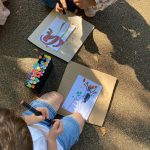
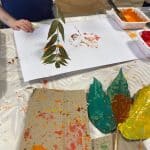
Building on the explorations of mark-making that began in September, the children experimented with different materials, observed the marks left by their movements, and discovered new ways to create.
Inspired by the Reggio Emilia approach, we focus on the joy of experimenting, trying again, and letting curiosity lead the way.
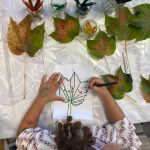
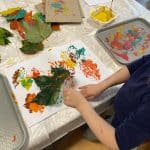
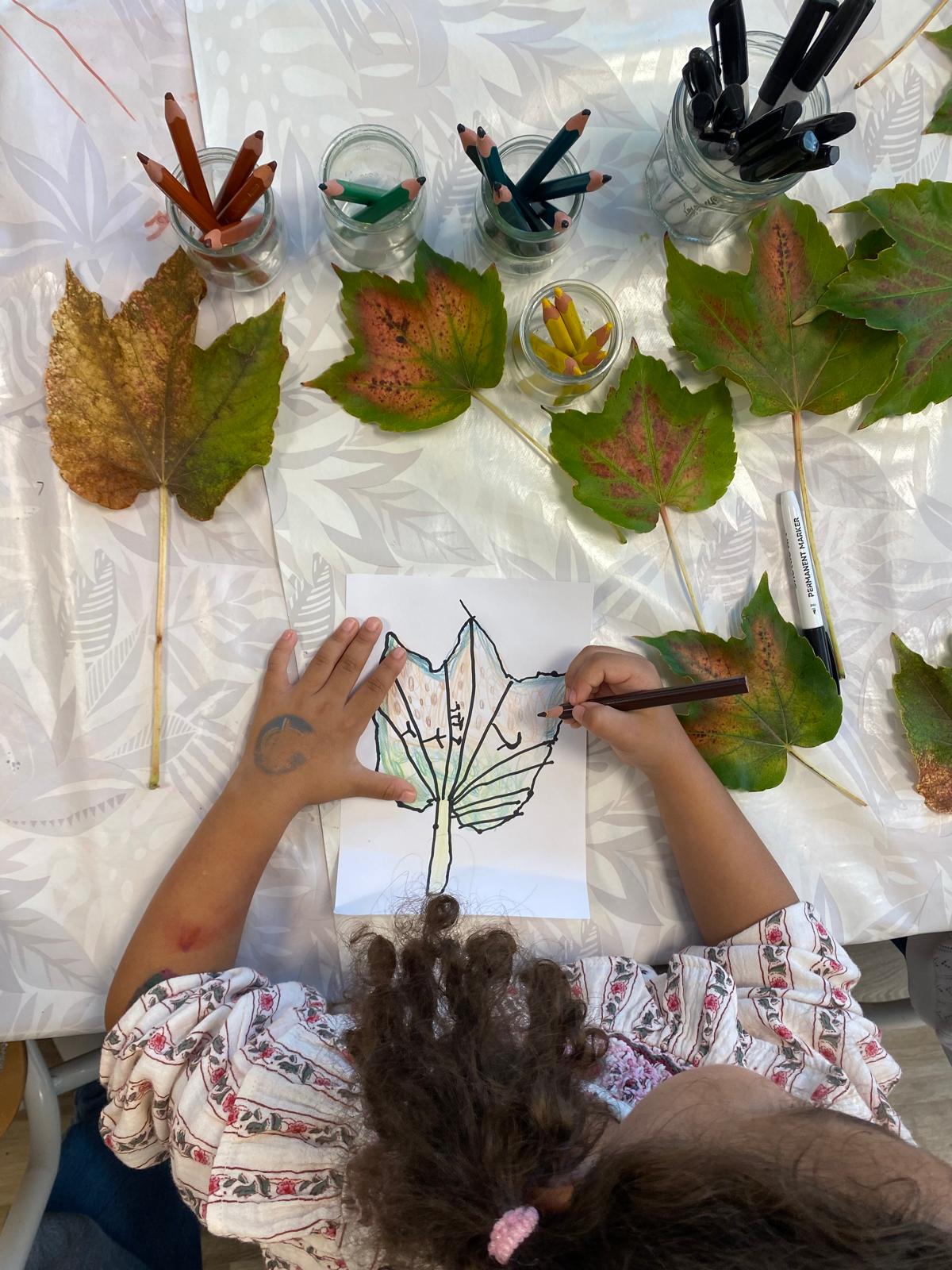
As autumn arrived, we turned our attention to nature, exploring the changing season through sensory activities and creative workshops to help the children discover and understand the cycle of the seasons.
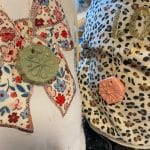
A big thank you to all the families who joined us for our very first parents’ get-together! It was a lovely opportunity to share a glimpse of the children’s daily lives and showcase their creations, some of which were also tucked into their take-home art bags.
Please note that some activities were not offered to every child, particularly those who were napping at the time.
We chose to respect each child’s individual rhythm and essential needs: sleep remains
a priority whenever a child needs it. We want every child to have the opportunity to explore and
at their own pace.
A Visit to AiRT de Famille
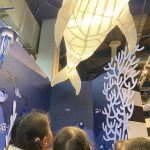
Our visit to AiRT de Famille gave the children the opportunity to discover new artistic worlds, spark their curiosity, and broaden their perspective on the world around them. These cultural outings nurture imagination, develop observational skills, and open up new possibilities for creative expression.
Our First Steps in the Garden: Our Bulbs Are in the Ground!
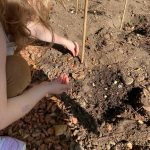
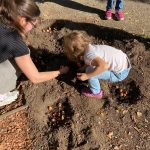
Our little garden has come back to life! The children helped tidy up our outdoor space before planting a variety of bulbs using a fascinating technique known as lasagna planting, which involves layering bulbs at different depths.
Through this hands-on experience, they discovered gardening techniques, explored the soil, and contributed to a shared project while learning about living things, the changing seasons, and the importance of patience.
Now, all that’s left to do is wait for the first shoots to appear!
Friday Afternoons: Exploring the Five Senses!
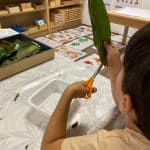
Every Friday, we offered workshops exploring the five senses: sight, hearing, smell, taste and touch. Through observation and hands-on experiences, the children learned to explore their surroundings, compare their sensory perceptions, and put their discoveries into words.
Over the autumn holidays, why not continue these explorations as a family? Observe the colours of the leaves, listen to the wind, smell the damp earth, touch different tree barks, or taste seasonal fruits. These little sensory adventures are a wonderful way to spark children’s curiosity as you explore the world together on your walks!
We wish you a wonderful autumn break, filled with gentle moments, restful days, and precious time together as a family. Enjoy this little pause to slow down, explore nature, and appreciate the small discoveries of everyday life.
We can’t wait to welcome the children back after the holidays and continue all these wonderful adventures together!
See you very soon,
The Teaching Team